How GTA III was developed
DMA Design, the move into a 3D city, and documented changes before release.
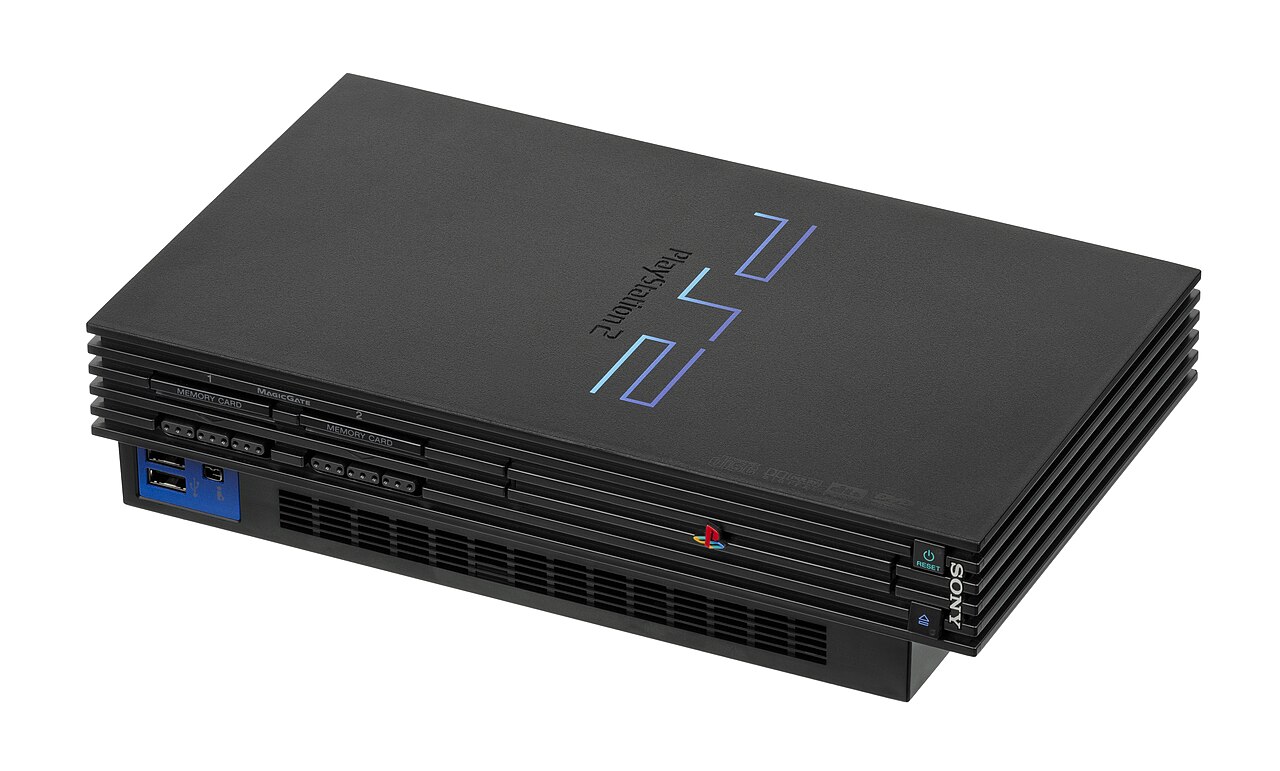
PlayStation 2 was the game’s original platform. The photograph shows an SCPH-30001 model.
Image version & licence
Official Wikimedia preview, copied without further image editing. The layout may display a crop. The stated photo licence is retained. Open image file
DMA Design and Rockstar Games
GTA III first appeared on PlayStation 2 in 2001. The original manual still identifies the development studio as DMA Design. Its credits name Leslie Benzies as producer, Aaron Garbut as art director, and Obbe Vermeij and Adam Fowler for technical direction. James Worrall, Paul Kurowski and Dan Houser are listed as writers. Radio production is divided between Craig Conner and Stuart Ross at DMA and Dan Houser at Rockstar Games.

Calton Square in Edinburgh, photographed in 2006: a former Rockstar North location.
Image version & licence
Image file copied unchanged; scaled or cropped for the layout. The stated photo licence is retained. Open image file
Translating an established idea into three dimensions
In a later developer interview, Vermeij describes a change of personnel between GTA 2 and III. The new group brought experience making three-dimensional games to the established GTA concept. The surrounding conditions also helped: the publisher supported expanding the team, while PlayStation 2 supplied a new technical platform. The transition was therefore more than an unchanged predecessor team adding another camera.
Late changes before release
In 2012, Rockstar explained the adjustments following September 11, 2001. According to that retrospective, one terrorism-related mission and some superficial details were removed, including vehicle features and individual lines of radio and pedestrian dialogue. The American packaging also changed; the previous design remained on the European edition. The publisher consequently disputes stories about a wholesale last-minute reconstruction. This explanation is a specific later manufacturer account, rather than evidence supporting arbitrary rumours about supposedly removed content.
Interpretation: the original and anniversary edition
The 2011 anniversary announcement distinguishes the 2001 game from a new adaptation for iOS and Android. Our editorial interpretation treats these as two production stages: first came the spatially connected combination of driving, movement on foot and an open city; later, that game was adapted for other devices. This separates the original team’s achievement from presentation and controls introduced by subsequent editions, while preserving both as parts of the game’s development history.
Recommendations and interpretation are editorial. Information may change after the date shown above.