How GTA grew out of Race’n’Chase
DMA Design, the 1995 proposal and the distinct development roles behind the first Grand Theft Auto.
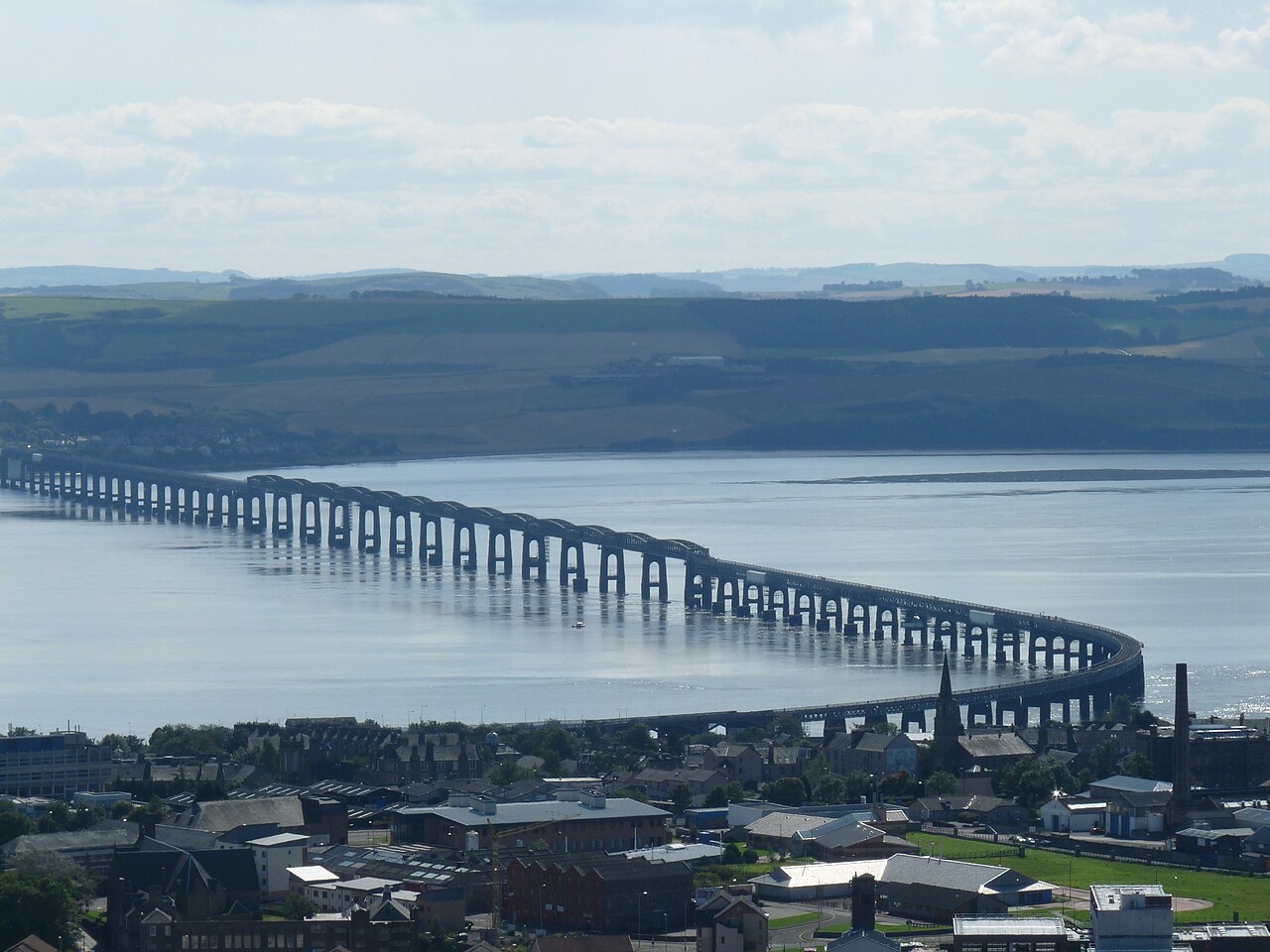
Dundee and the Tay, photographed from Dundee Law in 2011. DMA Design began in this Scottish city.
Image version & licence
Official Wikimedia preview, copied without further image editing. The layout may display a crop. The stated photo licence is retained. Open image file
DMA, BMG and a 1997 game
The first Grand Theft Auto was developed by DMA Design in Scotland. David Jones describes how a city experiment became a project for BMG Interactive. The publisher did not yet belong to Take-Two: a later official company announcement dates the acquisition of BMG Interactive to March 1998. The original developer, its publishing partner and the subsequently established Rockstar label therefore need separating. A familiar modern brand should not replace the people and companies involved at the time.
What the proposal actually establishes
The surviving Race’n’Chase proposal, version 1.05 dated 22 March 1995, is valuable evidence of ideas before release. It discusses an overhead city, changing vehicles, criminal activity and police pursuits. Several platforms were also proposed. These entries describe a plan, not proof that every feature or platform reached customers. The document provides a firmer foundation for the origin story than the claim that one accidental software fault invented the entire concept. Planned staff assignments likewise should not be mistaken for final credits.
Freedom made development difficult
Jones recalls a city engine by Mike Dailly whose perspective and sense of speed suggested opportunities for chases. The difficult part became the interaction of systems: players could combine actions instead of following one prescribed sequence. That freedom helps explain why GTA is more than a racing game with weapons attached. Travelling to a job and dealing with the resulting disorder were part of the experience. Jones’ account is a retrospective developer recollection rather than a production diary written during development.
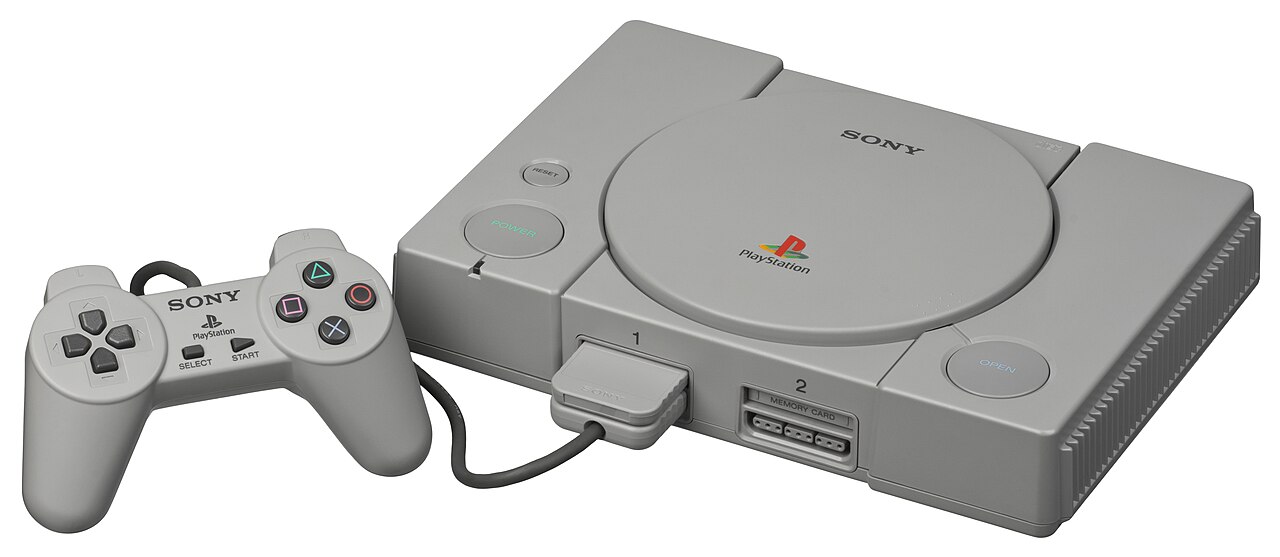
The PlayStation version involved separate porting work. The photograph shows a Japanese SCPH-1000 model.
Image version & licence
Official Wikimedia preview, copied without further image editing. The layout may display a crop. The stated photo licence is retained. Open image file
Original development and the console conversion
The published PlayStation credits explicitly identify the conversion as work by Visual Sciences. The original team appears alongside it with specific responsibilities: Keith Hamilton as team leader and lead programmer, and Mike Dailly and Aaron Puzey on the graphics engine. Map and mission work is also assigned by city. The console conversion has its own programming and production roles. The same game title therefore represents both the original city development at DMA and the work of a separate team adapting that design for PlayStation hardware.
Recommendations and interpretation are editorial. Information may change after the date shown above.