How GTA Vice City Stories was developed
Leeds and North’s second PSP design: broader missions, new engineering work, and the subsequent PS2 edition.
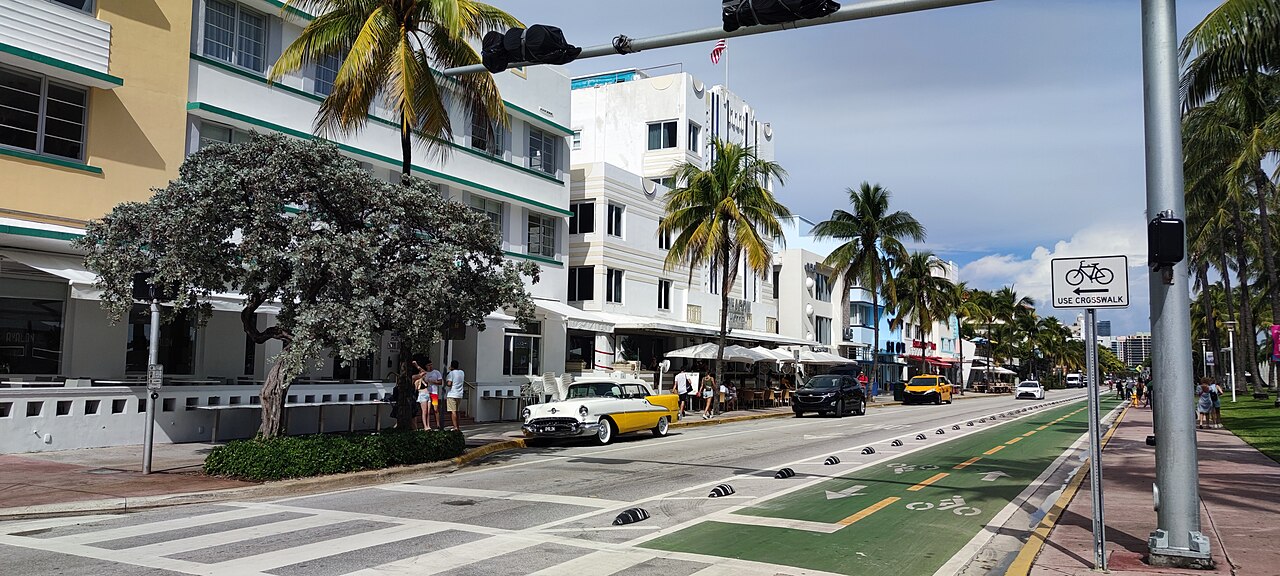
Ocean Drive in Miami Beach, photographed in 2022. This real city view provides context for Vice City’s design.
Image version & licence
Official Wikimedia preview, copied without further image editing. The layout may display a crop. The stated photo licence is retained. Open image file
Leeds and North expand the Stories series
The original Vice City Stories PSP manual lists Rockstar Leeds and Rockstar North. For Leeds, it names Gordon Hall as studio president, Ian Bowden as art director and Andrew Greensmith as lead programmer, among others. The game appeared as a separate Stories title in 2006. Its structure includes the Empire system: the city also functions as a network of criminal business locations, rather than only providing scenery for individual story assignments. The original credits and manual document distinct production and gameplay responsibilities.
Different missions rather than simply another city
In 2006, Hall described longer, more varied missions as the objective: VCS should not merely repeat LCS in another city. The earlier 1984 setting also allowed structural differences within familiar Vice City. He cites the Ferris wheel near Vice Point as a specific new landmark. The recognisable urban setting could therefore provide both continuity and changes for returning players.
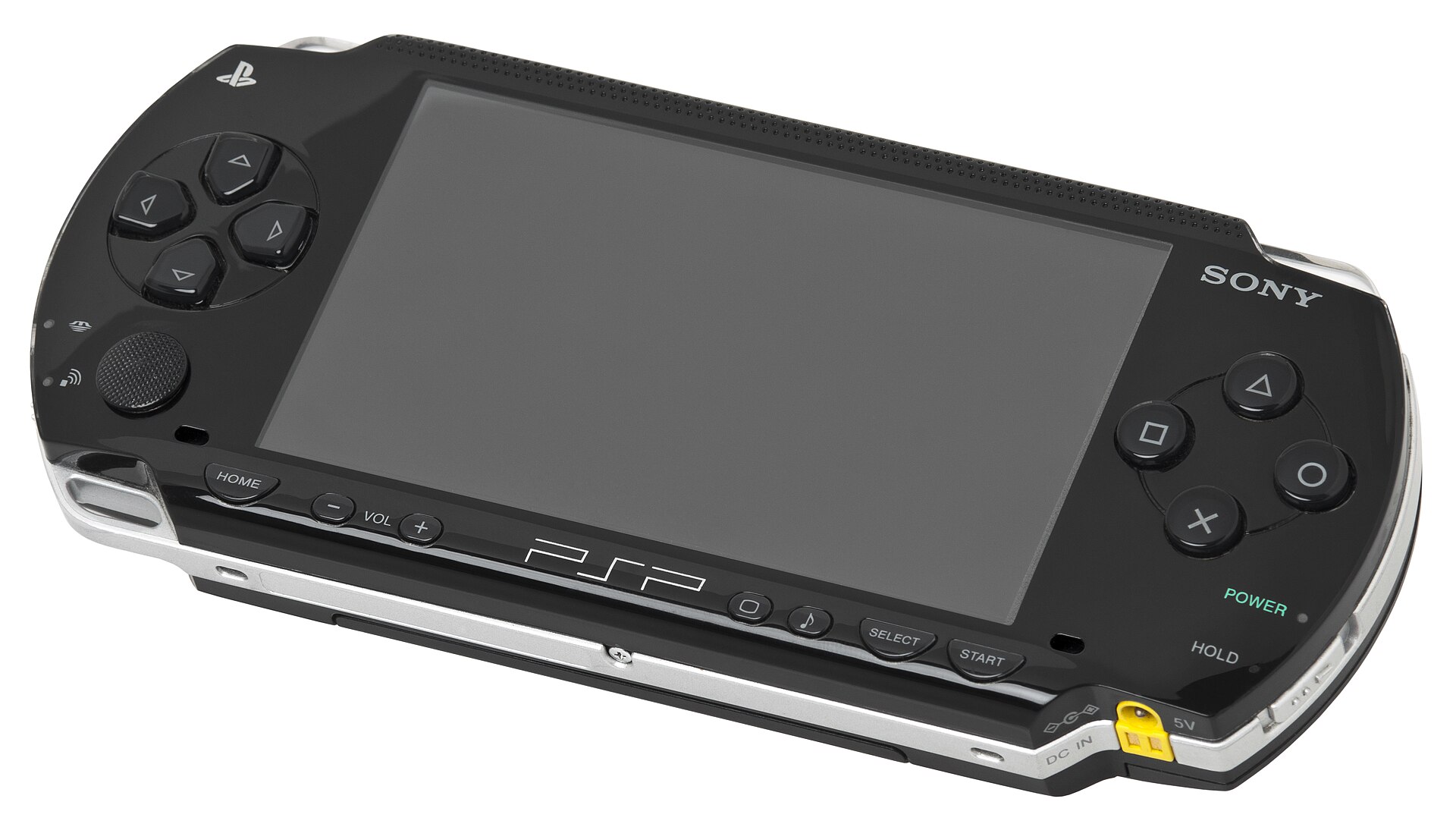
Sony PSP-1000 as an example of the original handheld platform. No game image is shown on its screen.
Image version & licence
Official Wikimedia preview, copied without further image editing. The layout may display a crop. The stated photo licence is retained. Open image file
Graphics processing, animation and water
In the contemporary IGN interview, Hall discusses more detailed city blocks, new lighting effects and revised communication between the CPU and graphics processor. Animation was also developed further. Aircraft made increased draw distance particularly relevant. Water physics and the behaviour of boats and jet skis formed another focus. The optimisation therefore addressed several perspectives on the same city: street-level views, aerial views and movement across water. Releasing another title on the same hardware did not mean retaining every technical process unchanged. These are documented areas of work rather than a performance claim for every device.
Interpretation: from handheld to television
Rockstar’s February 2007 announcement describes the PS2 adaptation with the same storyline and missions. Our editorial interpretation follows that sequence: the October 2006 PSP game was the starting point; the television version subsequently expanded its audience. Development connects a second, more technically demanding handheld production with a later home-console adaptation. That explains both the advance over LCS and the portable foundations still recognisable in the PS2 edition, without treating the later release as an independently originated adventure.
Recommendations and interpretation are editorial. Information may change after the date shown above.